Open Kitchen Acoustics: How to Keep the Energy Without the Noise
May 18, 2026
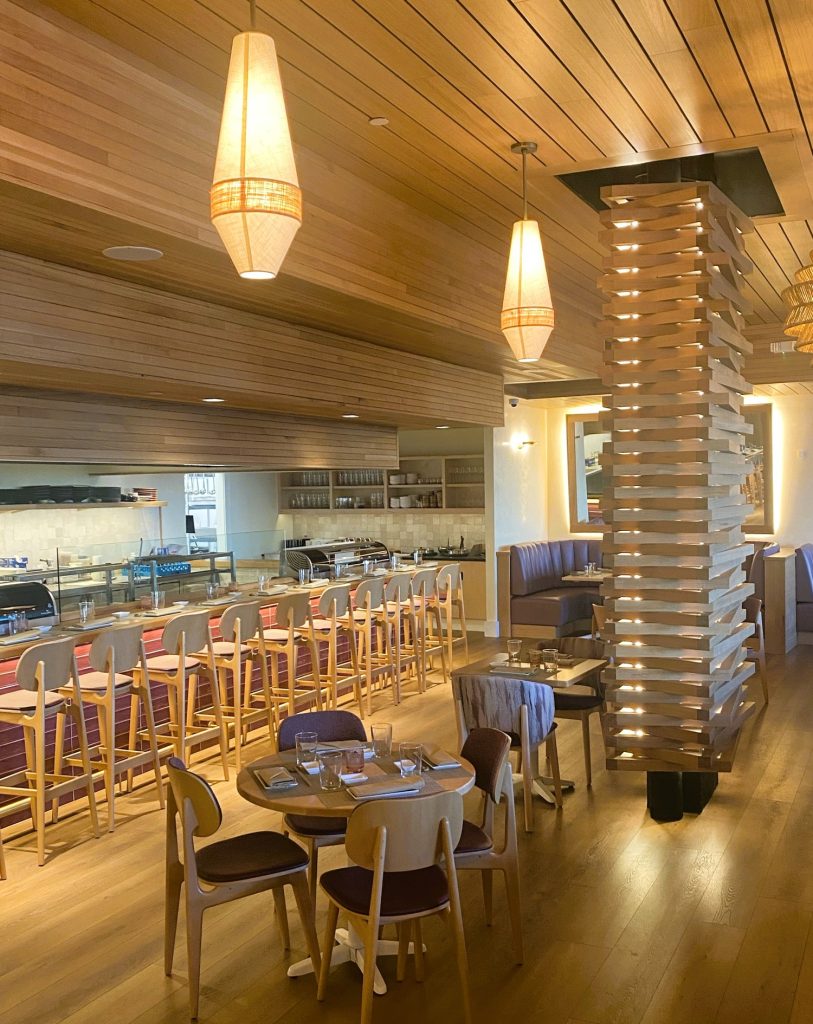
The Trade-Off Nobody Mentions When Designing an Open Kitchen
The open kitchen became one of the defining features of modern restaurant design for good reasons. Guests can watch their food being prepared. The kitchen team becomes part of the theater of the meal. The transparency builds trust and creates a sense of connection between the cooking and the dining experience.
What the open kitchen also does is remove the single most effective acoustic barrier between two of the noisiest environments in a restaurant building.
The kitchen side of that opening generates continuous noise at high volume. The dining room side is where guests are trying to have conversations. Without a wall between them, the noise produced in the kitchen enters the dining room directly and adds to the noise the room is already generating from conversation, music, and hard reflective surfaces.
Managing that acoustic impact does not require closing the kitchen off. But it does require understanding what is actually happening and designing a response to it.
What Makes a Commercial Kitchen So Loud
A commercial kitchen operating at service pace produces noise from multiple simultaneous sources.
Ventilation hoods are among the loudest. A properly sized commercial hood running at full capacity can produce noise levels between 65 and 80 decibels at close range, comparable to a busy highway. Hoods run continuously during service and cannot be turned down without compromising their function.
Cooking surfaces produce significant noise. High-heat cooking generates sizzling, popping, and steam release that can peak well above the ambient noise level of the kitchen. In a wood-fire or live-flame kitchen, these sounds are louder still.
Hard surfaces throughout the kitchen, stainless steel counters, tile walls, concrete or epoxy floors, create an environment with almost no acoustic absorption. Every sound produced in the kitchen reflects off multiple surfaces before leaving the space, amplifying the kitchen noise before it enters the dining room.
Staff communication in a kitchen is necessarily loud. Calling tickets, confirming orders, and coordinating service requires voices that cut through the ambient noise of the equipment. Even in a well-run kitchen, verbal communication contributes meaningfully to the overall noise output.
Dish handling, equipment operation, and the general percussion of a working kitchen layer on top of all of this.
How Open Kitchen Noise Affects the Dining Room
When kitchen noise enters the dining room through an open pass or a fully open kitchen design, it raises the ambient noise floor of the dining room directly.
A dining room that might sit at 65 to 70 decibels during service with a closed kitchen can easily sit at 72 to 78 decibels or higher with kitchen noise contributing to the ambient level. That difference matters more than it sounds because decibels are measured on a logarithmic scale. An increase of 10 decibels represents a perceived doubling of loudness.
The elevated ambient noise level triggers the Lombard Effect across the dining room. Guests speak louder to compensate for the higher baseline noise. Tables further from the kitchen raise their voices in response to the tables near the kitchen. The kitchen noise that started as a localized problem near the open pass spreads its acoustic effects across the entire room.
This is why open kitchen restaurants frequently have noise complaints concentrated in the guest seating closest to the kitchen, with secondary complaints across the broader dining room from the Lombard Effect cascade.
The Grease and Moisture Challenge
Treating acoustic problems near a commercial kitchen introduces material constraints that do not exist in the rest of the restaurant.
Standard acoustic panels, whether fabric-wrapped fiberglass, foam, or standard ceiling tiles, are not designed for exposure to grease, oil, steam, and food particles. A fabric-wrapped panel installed near an open kitchen pass will accumulate grease over time, compromising both the appearance of the panel and, eventually, its acoustic performance. Standard foam products are similarly unsuitable for food service environments near cooking surfaces.
Acoustic products installed in or near a commercial kitchen need to meet food service requirements. This means surfaces that can be cleaned without degrading the acoustic material, materials that do not trap grease or provide conditions for bacterial growth, and products that comply with relevant health and fire codes for commercial kitchen environments.
Cleanable acoustic panels with non-porous facings, perforated metal acoustic systems, and specific types of acoustic ceiling products are designed for these environments. The selection process for kitchen-adjacent acoustic treatment is more constrained than for the dining room, and getting it wrong means replacing panels that have failed the environment rather than fixing the noise problem.
Acoustic Treatment Strategies for Open Kitchen Restaurants
Treating the noise impact of an open kitchen requires addressing the problem from multiple directions simultaneously.
Treatment Above the Kitchen Opening
The transition zone between the kitchen and the dining room, the area directly above and around the open pass, is the primary point where kitchen noise enters the dining room. Installing acoustic absorption in this zone intercepts sound energy before it propagates into the broader dining room.
Ceiling-mounted baffles or clouds positioned above and immediately in front of the kitchen opening absorb a portion of the sound leaving the kitchen before it reaches the dining room floor. The materials selected for this location must be appropriate for the kitchen-adjacent environment, which rules out standard fabric products.
Treatment Within the Kitchen
Reducing the acoustic energy produced inside the kitchen before it exits reduces the noise load on the dining room. Hard kitchen surfaces can be partially treated with appropriate acoustic products on walls and ceiling areas away from direct cooking surfaces.
The ceiling of the kitchen is often the most practical treatment surface. Sound produced at counter and equipment level travels upward and reflects off the ceiling, amplifying before it exits through the open pass. Treating the kitchen ceiling with appropriate acoustic products reduces this amplification effect.
Treatment in the Dining Room
The dining room itself still needs treatment regardless of what is done at the kitchen boundary. The goal of kitchen-specific treatment is to reduce the contribution of kitchen noise to the dining room ambient level. The dining room’s own reflective surfaces still produce the Lombard Effect and reverberation problems that exist in any restaurant.
Treating the dining room comprehensively means that the kitchen noise, reduced by treatment at the source and at the transition zone, enters a room that absorbs it rather than amplifying it further.
Strategic Seating Layout
Acoustic treatment works most effectively when combined with thoughtful seating layout. Tables positioned further from the kitchen opening experience lower kitchen noise levels by distance alone. Partial barriers, raised seating platforms, or architectural elements between the kitchen and the nearest dining tables can reduce the direct sound path without closing off the visual connection.
None of these layout strategies eliminate the need for acoustic treatment, but they complement treatment by reducing the initial noise load on the seating most directly affected.
Preserving the Energy of the Open Kitchen
The goal is not to make a restaurant with an open kitchen sound like a restaurant with a closed one. The visual energy and transparency of an open kitchen are genuine assets that contribute to the dining experience.
Effective acoustic treatment in an open kitchen restaurant reduces the problematic noise, the accumulated reverberation, the Lombard Effect cascade, the difficulty holding a conversation, without eliminating the ambient energy of a working kitchen. A well-treated open kitchen restaurant still sounds like an active, alive dining room. It just does not overwhelm the people sitting in it.
The distinction is between noise that is disruptive and sound that is atmospheric. The goal of acoustic design in these spaces is to land in the second category rather than the first.
For a broader look at how acoustic treatment works across all restaurant types, read our complete guide to restaurant acoustics.
About Performance Acoustics
Performance Acoustics is a full-service acoustic treatment company based in Charlotte, NC. We design and install acoustic treatment for restaurants across the Southeast, including open kitchen environments where material selection and placement require a more specialized approach.

